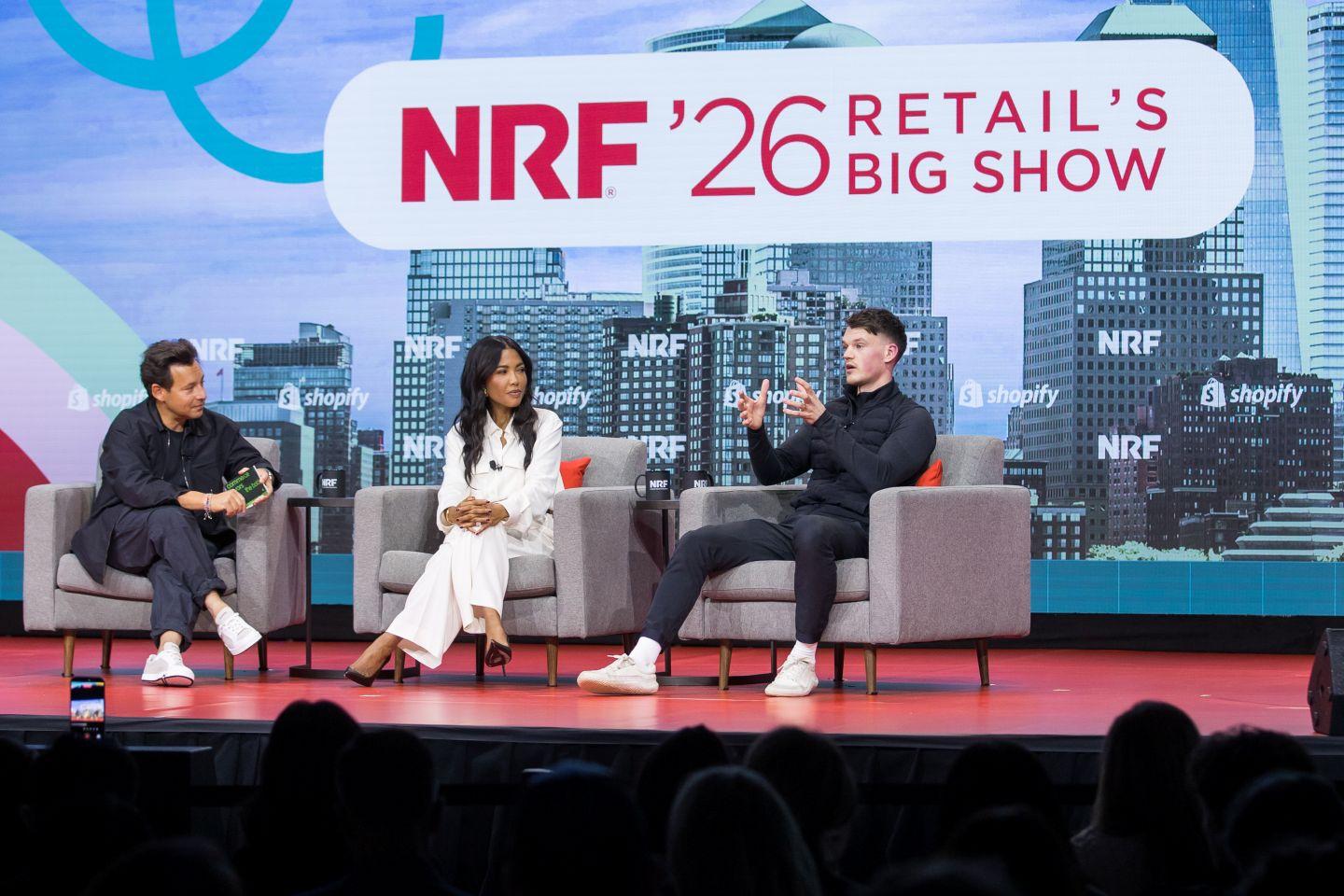
From left: Harley Finkelstein, president of Shopify, speaks with Emma Grede, founder, serial entrepreneur and host of the “Aspire with Emma Grede” podcast, and Ben Francis, CEO and founder of Gymshark, at NRF 2026: Retail's Big Show.
Billed as an “off-script discussion,” the NRF 2026: Retail’s Big Show session featuring founders of 21st century brand icons was more like watching a dinner party for heavy hitters.
Harley Finkelstein, president of Shopify; Emma Grede, founder, serial entrepreneur and host of the “Aspire with Emma Grede” podcast; and Ben Francis, CEO and founder of Gymshark, had a wide-ranging conversation, looking at where retail is now and where it’s going.
Stay up-to-date on the latest news and articles about Retail's Big Show.
Finkelstein set the table, opening with a reminder of how quickly the industry has changed. A year earlier, he had been challenged by a legacy retail executive who insisted he was overhyping AI. “I think I’m underhyping it,” he said, and the numbers proved him right. Over the last year, Shopify merchants saw a 14-fold increase in orders coming from agentic applications.
Grede and Francis clearly understand those numbers. Their brands are among the first retailers in the world to operate live on agentic commerce platforms.
Grede, co-founder of Good American and SKIMS, was clear about how she sees this moment. “We’re in the midst of a really seismic change,” she said. She admitted she does not know exactly where it will lead, but she knows her customers are already using AI in their daily lives.
“For me, it’s an easy yes,” she said. “You have to try these things. You have to be in it and you have to learn early.” If the customer is already there, she believes, the brand has to meet them.
Francis approached the topic with the same grounded clarity that has defined Gymshark since he founded it. He pushed back on the mythology that Gymshark was an early digital pioneer. “That actually wasn’t true,” he said. “We rode on the tail feathers of companies like Shopify. We focused on our customer, our product and our brand.” He sees AI the same way: Gymshark does not need to reinvent the technology. It needs to stay focused on what it does best and partner with people who are the best in the world at the rest.
Leading a company in the midst of such seismic change requires adaptation from the C-suite as well. Grede has restructured her own habits, she said, now dedicating time each week to what she calls her “AI day.” She described AI as a second executive brain and said she constantly asks herself whether a task should be done by her, by her team or by AI.
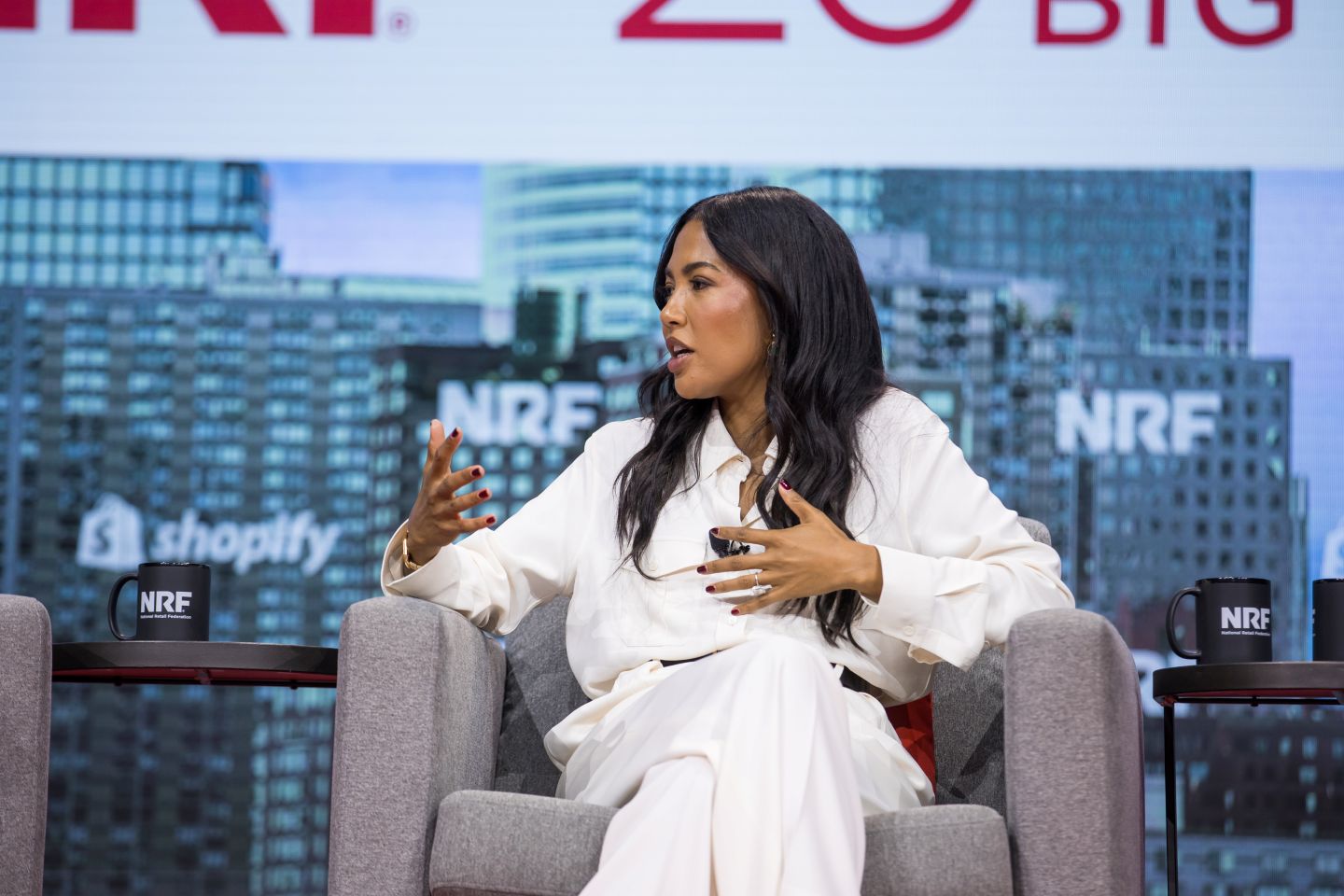
Emma Grede speaks at NRF 2026: Retail's Big Show.
“It turns out AI should be doing quite a lot of it,” she said. The goal is not to remove the human element but to protect it. “Only I can obsess over product innovation,” she said. Everything else can be delegated.
Francis spoke about focus in a different way. Gymshark’s core is lifting, and he has learned that narrowing the product range has accelerated growth more than expanding it ever did. “As we’ve narrowed our focus and really tried to become sharp on what we can be the best in the world at, the business has grown far more quickly,” he said.
That discipline extends to physical retail, where Gymshark is methodical about opening new sites. “We talk a lot internally about building a hundred-year brand,” Francis said. That mindset forces long-term thinking rather than short-term gains.
Grede said she built Good American by challenging the myths of the industry, including the idea that women should make fashion decisions based on limited size ranges. “Sometimes it takes an outsider to step into something that was not understood at the time,” she said. That instinct has paid off. Customers trust the brands because they know the products are built with intention and loyalty, not shortcuts.
While the tools of 21st century retail may be different, vibrant leadership and a close relationship with the customer remain crucial to success.